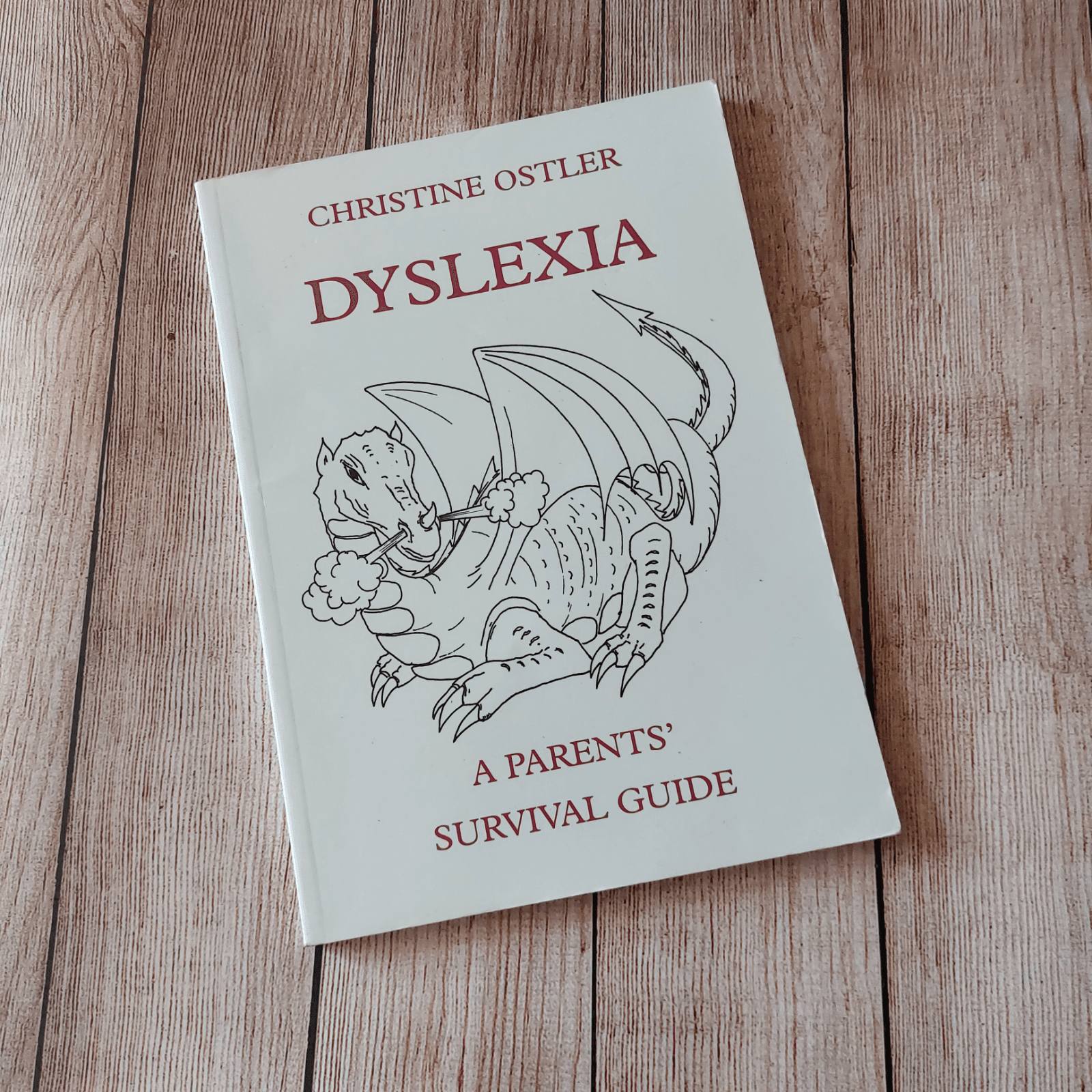
A Parents’ Survival Guide by Christine Ostler has some very good reviews on various websites, and is recommended widely in many resource banks and by specialists; a fact I find a little baffling. Potentially, I am not the correct demographic - although I am a parent - a mother more importantly (to Ostler, not to me), I have a child with dyslexia, I am educated to a high level, consider myself middle-class and have high aspirations for my children personally and educationally…I know those last few things are not a given, but Ostler is clearly writing with this very audience in mind. So why does it fail to resonate with me? It may simply be down to its dated, not-very-progressive view of learning difficulties and modern parenting. That said, there is no doubting Ostler’s approach and personal connection with the subject matter is evident and you don’t have to read it cover to cover like I did!
The positives first. Chapter 3 - 9 is the real quality help. Practical tips and strategies you can use at home. If you want to know how to help your child tell the time on a clock face or find ways to engage them in spellings - This is the bit to focus on, there’s a lot of advice, lots to try out and there are plenty of different strategies.
It is not the easiest read despite being a slim book. It's quite a dense layout; small font,small margins, Times New Roman and feels very cluttered. It reminds me of the workbooks we were given in the 80s in primary school. It is firmly implanted in its time, with references to Blue Peter and the Radio Times TV listings and is rooted in Ostler’s experiences with her own child.
Ostler also has some extremely old fashioned, stereotypical views on gender roles in parenting and manages to define the attitudes of ‘mothers’ and ‘fathers’ in just a few short bullet points. I found this section particularly odd, maybe it is just not my experience, and it is undoubtedly intended for clarity and support, but it jars. It jars in the same way that Ostler refers to ‘your dyslexic’ and ‘dyslexics’ throughout the book. The agency of the individual being removed and the complex differences between individuals minimised. This overt labelling undermines the desperate need for child-centred, less label-driven initiatives which lead to meaningful support. It jars in the same way she admits to buying her 13 year old a fire extinguisher for Christmas and allowing him to conduct controlled explosions in his bedroom. It feels a far cry from the parenting approaches today, but it’s quite entertaining in that respect too.
Ostler provides some insights into organisational support that can be given at home; the use of different boxes and established family routines. It very comprehensively covers homework, study skills and hobbies. Much of the advice is potentially helpful, but outdated and even a bit rambling at times. I felt the book could do with sharper editing in places. I would also question the negativity which pervades. Ostler’s views erred on the overly cautious to mildly discouraging, and her language choices were alarmist in places (hazards!!). I think her well-meaning intention to raise awareness of struggle can come across as pessimistic and not at all inclusive. She warns of the difficulty that sport and music can present due to coordination and reading music, but in reality, many dyslexic people are incredibly gifted in these skills, and many people who are not dyslexic are terrible at both. I think she has drawn a spurious correlation with her son’s dyslexia and lack of sporting or musical prowess and overextended it. I am not at all critical of the intent behind Ostler’s book, but I feel the title is misleading. It is such a personally biased account of dyslexia and family circumstance that it cannot cater to all parents of all dyslexic learners. The blurb claims to be ‘a down-to-earth’ survival guide…’ and I did not feel that. The perspective is wholeheartedly middle-class, written by a highly aspirational, professional person. In her parenting approach she side-steps a deficit approach to dyslexia, deeply understanding her child’s needs as a learner and allowing him to flourish in his chosen path, but her writing has an underlying bias towards conventional academic routes and career goals. She also reveals an academic superiority bias when boasting of her children’s career aspirations - one wants to be editor of The Times and the other is going to university. She herself is educated to a high level and her views feel somewhat detached from the experience of today’s parents. Of course, realistic expectations must be managed, but doors should not be closed due to dyslexia. What if your child has dyslexia but wants to pursue a highly academic, study rigorous, content heavy degree course? Why should they instead be funnelled towards a B-tech, a VGCSE or an apprenticeship if they are not interested? It is fantastic that these things are available, but they are available and accessible to all and university degree options should also be.
I don’t wish to do Christine Ostler a disservice with this review, and her personal engagement with the topic is abundant. It just doesn’t account for the vast spectrum of difficulties and manifestations of dyslexia, as the focus is on her central ‘character’’, her son, Jonathan, and his particular strengths and challenges. As a ‘survival’ guide for dyslexia, it didn’t fit the bill. It is a survival guide to Jonathan.
There is a lovely bit at the end of the book, written by Jonathan, in which he fondly recalls his childhood building tree houses and digging trenches - even living in the trench for a bit. His experiences are very nostalgic and a bit ‘Enid Blyton’. Maybe it’s the rose-tinted spectacles of hindsight, but it doesn’t acknowledge the self-esteem, anxiety or personal struggles that a person with learning difficulties could surely not have avoided, growing up in the 80s and 90s in an education system, as it still does today, favours neurotypical development and learning. The view in the book overarchingly is one of a child with parents who were willing, able financially and educationally, to give everything to his needs and personal growth. This is just not the case for many families. In that respect, the advice feels exclusive. A more positive take is that it is aspirational in showing parents what they could strive for with their child. I suspect there are more recent books which reflect a more diverse and modern view of parenting a child with learning difficulties, so proceed with eyes open on this one!